

2025 Impact Report
Chicago CRED is working to achieve a transformational reduction in gun violence in Chicago, by providing direct services to those at the highest risk of gun violence, and by supporting the building and scaling of the Community Violence Intervention (CVI) ecosystem.

Over the past decade, our organization has grown while the field of community violence intervention (CVI has evolved into a highly specialized and complex profession. Today, Chicago is addressing gun violence not merely as a criminal issue but as a public health issue that calls for prevention strategies that are too often ignored or undervalued by traditional law enforcement.
Chicago CRED is among some two dozen CVI organizations serving nearly half of Chicago’s 77 neighborhoods, reaching thousands of individuals at extreme risk of shooting or being shot and intervening in thousands of disputes, any one of which can lead to gun violence. The CVI sector began with mostly private funding but is now being sustained and expanded with state and local government funds. In order to affirm and preserve our unique role as a leading independent advocate for the CVI sector, CRED remains entirely privately funded, but our public policy goal is crystal clear: CVI must be a permanent, publicly funded feature of Chicago’s public safety strategy.
I am especially pleased to report that gun violence in the City of Chicago has dropped for six of the last 8 years, and is down about 40 percent in 2025. Based on current trends, Chicago is on track to achieve the lowest levels of gun violence in more than 60 years. While it is impossible to trace the direct cause of this remarkable decline in gun violence, we are absolutely confident that our organization and the CVI sector as a whole is making positive contribution. We are also confident that, with the resources to take CVI to scale in just a handful of the most violent neighborhoods in the city, we can bring gun violence down to levels that could put Chicago on par with the safest big cities in America.
To get there, we need public support for our partner organizations across the city and private support for ourselves. CVI work is hard and dangerous and can be very frustrating for the men and women involved. Many have themselves been traumatized by gun violence and working in this field puts them at extreme emotional, mental and even physical risk. They are heroes who deserve our deepest gratitude and our highest praise.
Our work saving lives and healing communities is only possible because of you, so I thank you for your generosity and support. I hope this report gives you some sense of the positive impact your dollars are making. I also invite you to take time to meet some of the people on our team and the people we serve. Their stories are inspiring, their determination is extraordinary, and their courage is limitless.
Thank you again and please do not hesitate to reach out with questions, concerns or suggestions.
Sincerely,
AD
CRED Direct Service: CVI Works
A growing body of data demonstrates CVI’s effectiveness alongside improved law enforcement. An independent Northwestern University evaluation found that CRED alumni are 73% less likely to be arrested for violent crimes 24 months after program completion compared to individuals in the comparison group. This research shows correlation rather than causation; however, the consistent pattern across multiple years and locations shows reductions in CRED-served neighborhoods that consistently outpace city averages and often drive down the city’s overall gun violence reduction numbers.
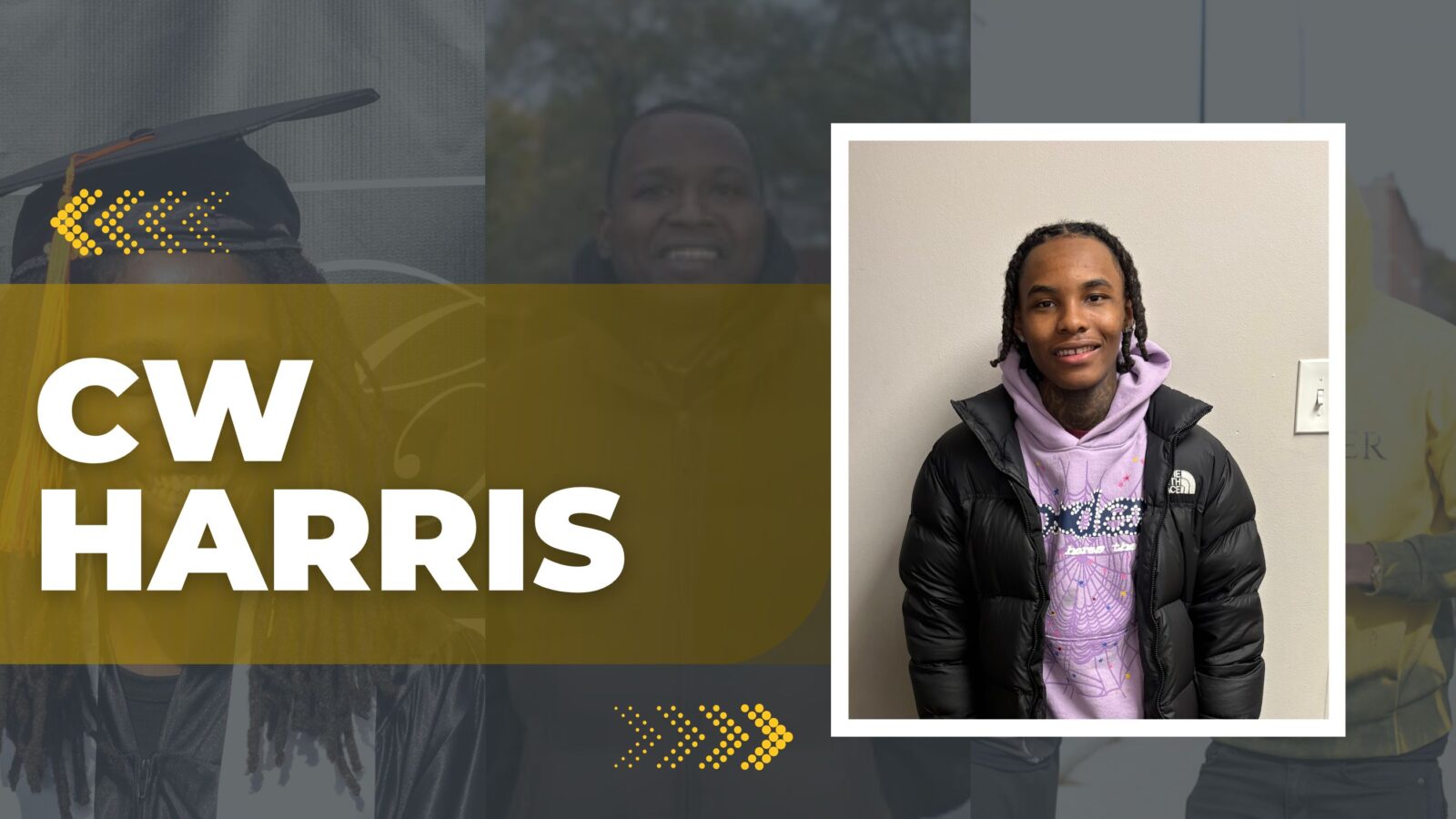
CW Harris grew up on the West Side of Chicago, a community where survival often took precedence over dreams. Despite being raised in a two-parent household, the harsh realities of his environment had a deep impact on him from an early age. At just 13 years old, he was introduced to guns and quickly became entangled in street violence and gang activity. By the age of 18, he found himself incarcerated.
In 2023, while on parole, CW was introduced to Chicago CRED, a turning point that would change the course of his life. Around the same time, he received life-changing news—he was going to be a father. The day he officially joined Chicago CRED at age 21 was also the day his son was born. That moment ignited something powerful within him: the will to transform.
Since then, CW’s outlook has radically shifted. No longer defined by his past, he has embraced a future of purpose. Now serving as a Junior Life Coach at Chicago CRED, he dedicates his life to mentoring youth and helping them avoid the same pitfalls he once fell into. His mission is clear: to guide others toward a life of peace, opportunity, and self-worth.
As CW puts it:
“I used to run the streets looking for a way out—now I walk with purpose, showing others the way forward.”
CRED by the Numbers

Participants Served

Therapeutic Services

Job Placements

Housing Placements

H.S. Graduates
Evidence of Impact
Extended CVI Programming Reduces Participants’ Engagement in Violence CORNERS’ research has shown that sustained participation in CVI programming significantly impacts participants’ likelihood of engaging in violence. In 2023, CORNERS found that participants who completed all phases of their CVI program were 73.4% less likely to be arrested for a violent crime two years later relative to non-participants. Further, emerging research from a first-of-its-kind survey of CVI participants suggests that such individuals demonstrate positive behavioral and mindset changes—reductions in gun carrying (56%), decreased participation in risky activities (36%), and less willingness to escalate conflicts with violence. The same survey also reports a significant 40% reduction in participants’ violent victimization and a 19% reduction in participants’ secondary exposure to violent victimization.
Starting in 2023, CVI communities experienced some of the greatest decreases in gun violence (Figure 3). Further, the publicly-funded Peacekeepers Program – a CVI strategy that positions workers at local “hotspots” to mediate conflicts and interrupt violence – contributed to a 31% reduction in shootings in Program community areas during 2023-2024 relative to 2021-2022. In addition, the number of peaceful days (i.e. days without shootings) has increased in every Chicago community area covered by the Peacekeepers Program relative to the prior year, with 30% of communities experiencing an additional 2 weeks or more in between shootings. The result: 72 more days of peace in communities with historically high levels of violence. Finally, CORNERS estimates that from July 2017 – December 2021, CVI programs in Chicago prevented at least 383 shootings and 605 arrests for violent crimes in their communities, showing a strong positive impact even during the height of the pandemic.
Expanding CVI: Building An Ecosystem
Over the past 10 years, Chicago CRED has helped to build and support an extensive network of community-based organizations capable of providing hyper-local support in communities facing concentrated gun violence. CRED’s team, which includes leaders with experience at every level of government, nurtured the growth of this body by sharing the research, data, and network science underpinning CRED’s work and by providing essential financial resources. Chicago’s CVI ecosystem is now among the most advanced in the country, comprising dozens of direct service organizations, robust engagement from the public sector, businesses offering employment and resources, and philanthropists committed to reducing violence.
CRED’s investment in the movement
Since 2016, CRED has made over $50 million in grants to a variety of community-based organizations across Chicago. While providing direct services is critical to CRED’s mission, we know that in some cases we can have the most impact is to provide resources to other practitioners. To that end, CRED’s grants have:
- Allowed organizations in nine communities to broaden and deepen their street outreach and conflict mediation capacity, reaching high-risk street groups that were previously not receiving services.
- Supported the broader CP4P network through the Partnership for Safe and Peaceful Communities, contributing to a well-rounded CVI infrastructure in 28 communities.
- Enabled 37 organizations (with budgets under $500,000) in over 10 communities to build their programmatic and administrative capacity and ensure their sustainability.
Average Cost to Fund Each Participant
Months of Programming Plus Ongoing Alumni Support
Estimated Savings if Gun Violence in Chicago Falls 80%
Partners
CRED’s Violence Prevention Partners
Discover the incredible work our talented partners and community leaders are doing in their respective neighborhoods.












Roseland, on Chicago’s Far South Side, has a history marked by resilience and struggle. Once a thriving immigrant neighborhood, it faced decades of disinvestment, gang infiltration, and economic decline beginning in the 1960s. Today, while unemployment and crime remain high, residents continue to believe in a renaissance of hope. At the heart of this movement is the Youth Peace Center of Roseland (YPC), founded in 2008 by Mr. and Mrs. Jones. They envisioned a safe haven where young men at risk of violence could find guidance, opportunity, and support to build stronger futures for themselves and their families.
YPC provides mentoring, pre-employment training, life skills, personal development, and conflict resolution. Its relational model-walking alongside youth with consistency and trust-has set it apart as a lifeline in Roseland. “We believe every young person is more than their circumstances,” says Mrs. Wendy Jones, co-founder. “Our purpose is to show them they are valued, capable, and worthy of building a future that looks different from what the streets offer.”
Through a powerful partnership with Chicago CRED (Creating Real Economic Destiny), YPC expands its reach by addressing the root causes of violence and connecting youth to education, employment, and healing. Together, they are not only preventing shootings but also breaking cycles of trauma and restoring stability for families. The leadership of Mr. and Mrs. Jones has made YPC more than a community center-it is a movement of transformation and hope. As young men step into new opportunities, the ripple effect strengthens families, restores safety, and points to a brighter future for Roseland.

SC2 and Our Role
CRED now leads an ambitious city-wide scaling effort in collaboration with other CVI partners. This coordinated approach involves sharing information and data across organizations, as well as implementing the CVI field’s five established types of services with fidelity (outreach, case management, behavioral health, education, and employment). By 2029, this effort aims to reduce gun homicides by at least 50% from the 2021 baseline year, where more than 4,400 people were shot and 800 killed. Beyond reducing shooting victimizations, this effort seeks to heal and employ more than 10,000 people who face tremendous barriers to entering the legal economy during that timeframe. By 2034, the goal is to achieve a homicide rate of 200 or fewer, representing a 75% reduction, which would put Chicago on par with New York and Los Angeles. Here is more info on SC2.
Specifically, CRED is one of the steering committee members providing leadership on CVI program excellence and on the Chicago CVI eco-system. CRED also hosts a majority of the SC2 staff focused on implementation at the neighborhood level, data infrastructure, operational and fiscal accountability. The Interim Executive Director of SC2 is also hosted at CRED.
Public Sector Funding
In coalition with our partners, Chicago CRED educates both elected and appointed public servants about the importance of investment in the CVI ecosystem. We focus on policy change by educating legislators and raising awareness around policies that support our mission. Based on a growing body of research, we make the case to our city, county, and state officials that CVI must become a permanent fixture of our public safety infrastructure.
Over the past several years, our efforts have contributed to an XX%/dollar increase in public resources dedicated to CVI work.
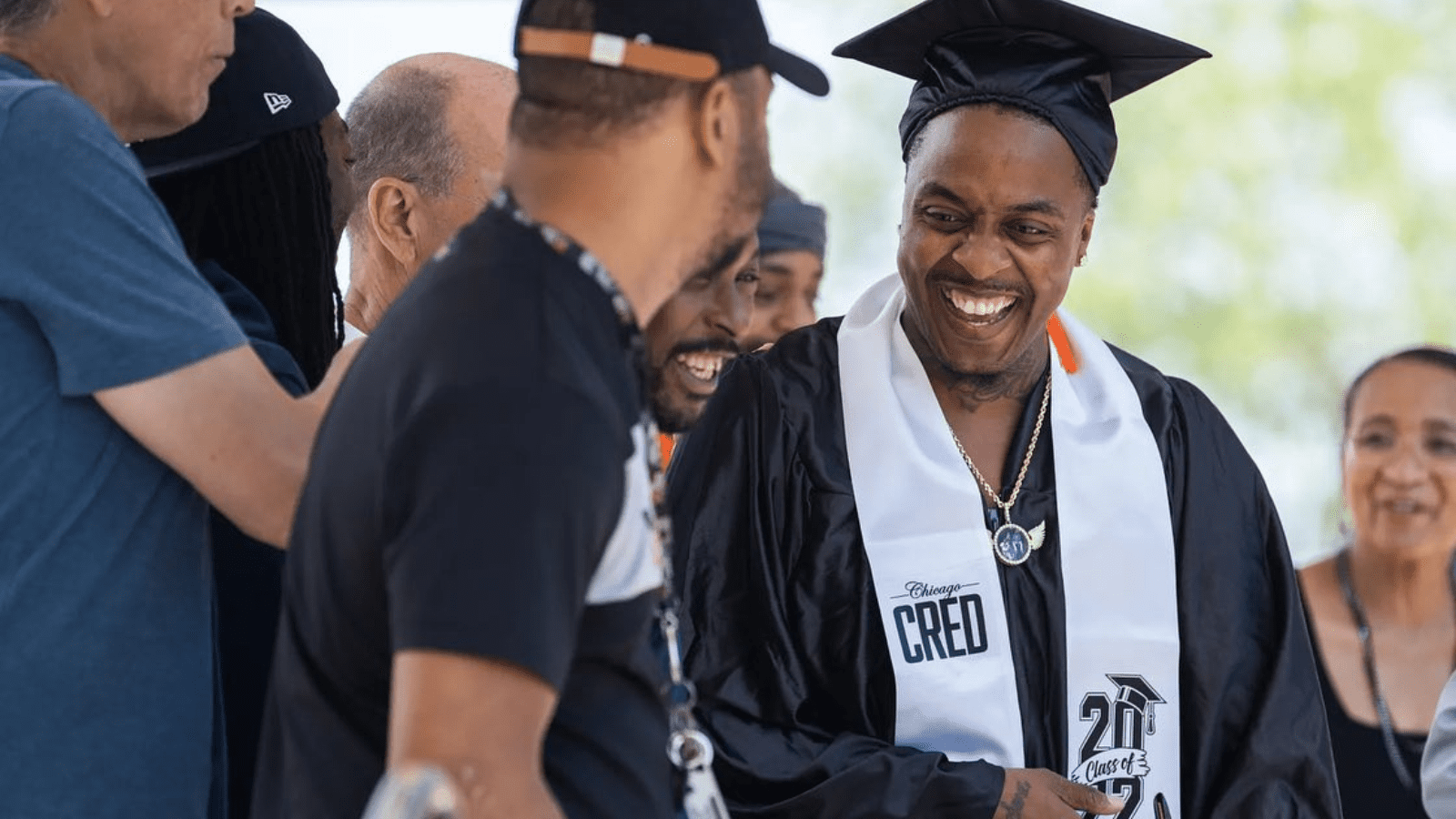
Gun violence should never have been normalized
“We imagine a future in which CVI is a part of our public approach to gun violence, and in which our city and all its neighborhoods are safer. Gun violence should never have been normalized. We reject that, and look forward to building a much safer and brighter future together…While we’re really proud of the work we’ve done in partnership over the last 10 years, we know we aren’t done yet. We need your support to continue building toward that future together. Join us.”
Arne Duncan | Managing Partner | Chicago CRED