
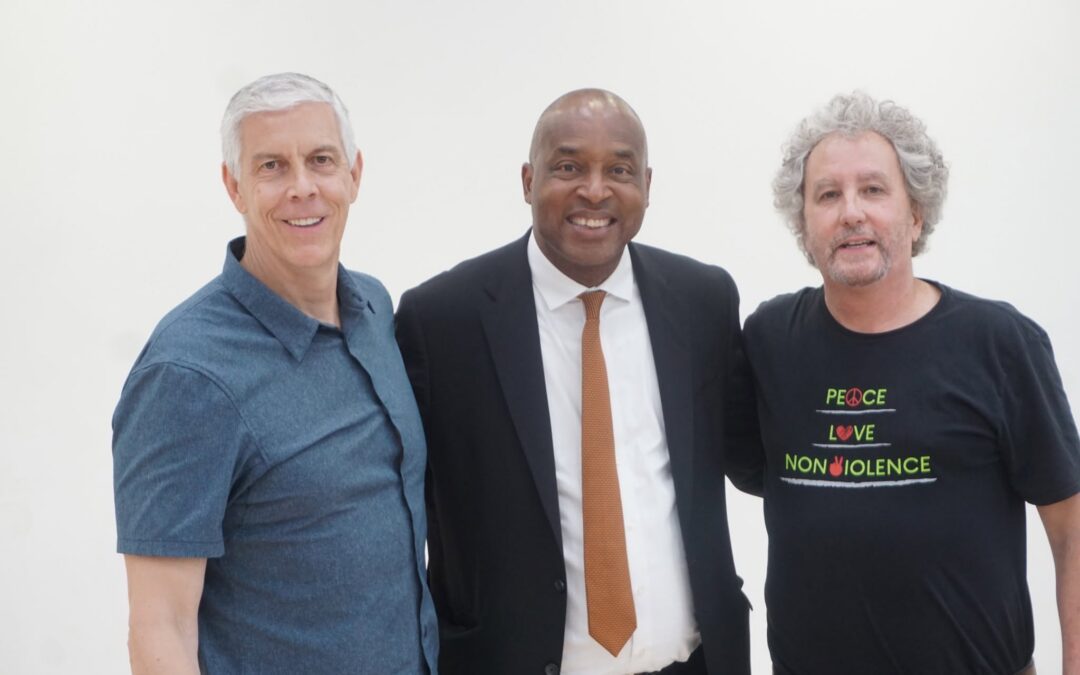
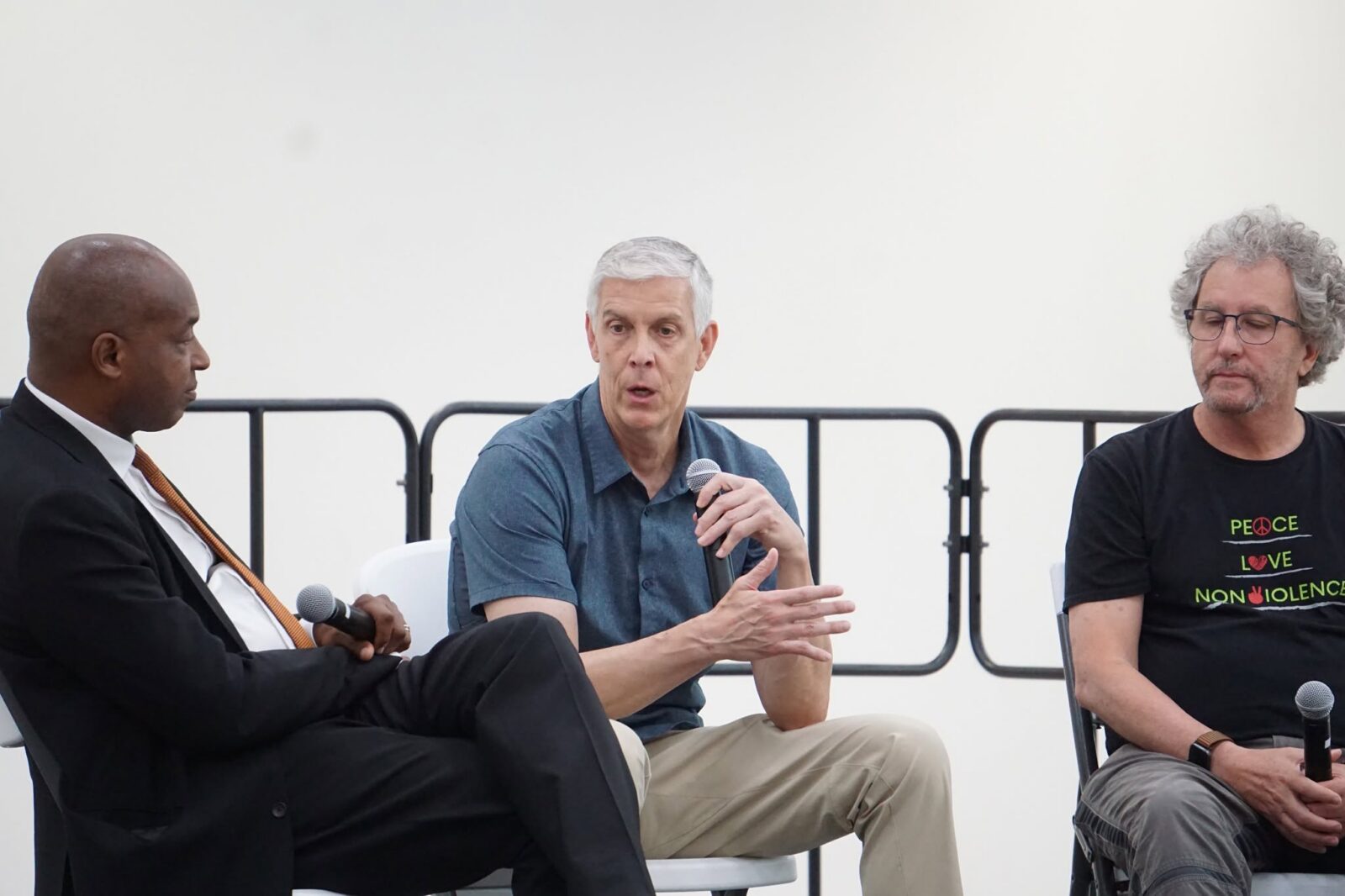
On Tuesday, July 14, community members, healthcare professionals, violence prevention leaders, and advocates gathered at the Sankofa Village Wellness Center on Chicago’s West Side for an inspiring conversation about one of the city’s most urgent challenges: ending gun violence through healing, prevention, and community partnership.
The event celebrated the release of Healing the Gun Violence Epidemic: Ending Violence, Rebuilding Communities, and a Trauma Surgeon’s Vision for Restoring Hope, the new book by Dr. Selwyn Rogers, founder of the University of Chicago Medicine Trauma Center. During the evening, Dr. Rogers signed and gave away 100 free copies of his book while sharing the experiences that have shaped his belief that gun violence must be addressed as a public health crisis, not simply a criminal justice issue.
Drawing from decades of experience as a trauma surgeon, Dr. Rogers spoke about the devastating physical, emotional, and economic toll gun violence takes on individuals, families, and entire neighborhoods. He also emphasized the importance of investing in comprehensive solutions that combine emergency medical care with prevention, trauma recovery, and community violence intervention (CVI). Those efforts, alongside the work of countless community organizations, have helped contribute to Chicago reaching a 60-year low in shootings and homicides.
One of the evening’s most moving moments came from Chanel Jones, a Family Case Manager at Chicago CRED, who shared the deeply personal story of her grandson surviving after being shot 15 times. Jones spoke with gratitude about the extraordinary care provided by Dr. Rogers and the trauma team at the University of Chicago Medicine, crediting their expertise and commitment with saving his life. Her testimony served as a powerful reminder that behind every statistic is a family forever changed by violence and a community determined to support healing.
Chicago CRED Founder Arne Duncan reflected on the progress Chicago has made in reducing violence while emphasizing that sustaining these gains will require continued investment in community-based solutions. He highlighted the essential role of outreach workers, case managers, violence interrupters, and neighborhood organizations that work every day to prevent violence before it occurs and connect people with opportunities to build safer futures.
Teny Gross, Founder and CEO of the Institute for Nonviolence Chicago, reinforced the importance of treating violence like any other public health epidemic. He spoke about the need to address trauma, create pathways to healing, and strengthen neighborhoods through long-term investments that tackle the root causes of violence rather than simply responding to its consequences.
Throughout the evening, one message remained clear: reducing gun violence requires more than emergency response. It requires healing trauma, restoring hope, and investing in the people and organizations working every day to strengthen Chicago’s neighborhoods. As attendees left with signed copies of Dr. Rogers’ book, they also left with a renewed sense of optimism that lasting change is possible when healthcare, community leadership, and violence prevention efforts work together toward a shared vision of safer communities.